
Almacenamiento
There are multiple ways of storing notes in Butterfly. Either by using your device storage, or by using the cloud storage (WebDAV).
Data directory
Sección titulada «Data directory»The data directory is the directory where documents, templates, and packs are stored.
On desktop you can find it in ~/Documents/Linwood/Butterfly.
En móvil está en getExternalFilesDir(null)/Linwood/Butterfly.
You can also change it under Settings → Data.
En este directorio encontrarás una carpeta Documents, Templates y Packs.
Los datos de la aplicación se almacenan en su navegador. Se almacena en un almacenamiento local. Abre las herramientas del desarrollador en tu navegador y verás los datos.
Plataformas nativas
Sección titulada «Plataformas nativas»By default, the application saves the data in your documents folder in a subfolder called “Linwood/Butterfly”. This folder is created when you save data for the first time. Esta carpeta se puede cambiar en la configuración.
Almacenamiento remoto
Sección titulada «Almacenamiento remoto»The application data can be stored on a remote server. Esto es útil si desea compartir los datos con otras personas o si tiene varios equipos. Actualmente sólo el protocolo WebDAV es compatible.
To add a remote server, open Settings → Connections and add a connection. Añadir la URL del servidor remoto y el nombre de usuario y contraseña. Después, puede especificar la carpeta donde se almacenan los datos.
To get the WebDAV URL, please visit the documentation:
Nextcloud (it should look like this: https://nextcloud.example.com/remote.php/dav/files/username/, replace username and nextcloud.example.com with the correct values)
Instructions for NextCloud
Sección titulada «Instructions for NextCloud»How to get the URL
Sección titulada «How to get the URL»- Go to
Files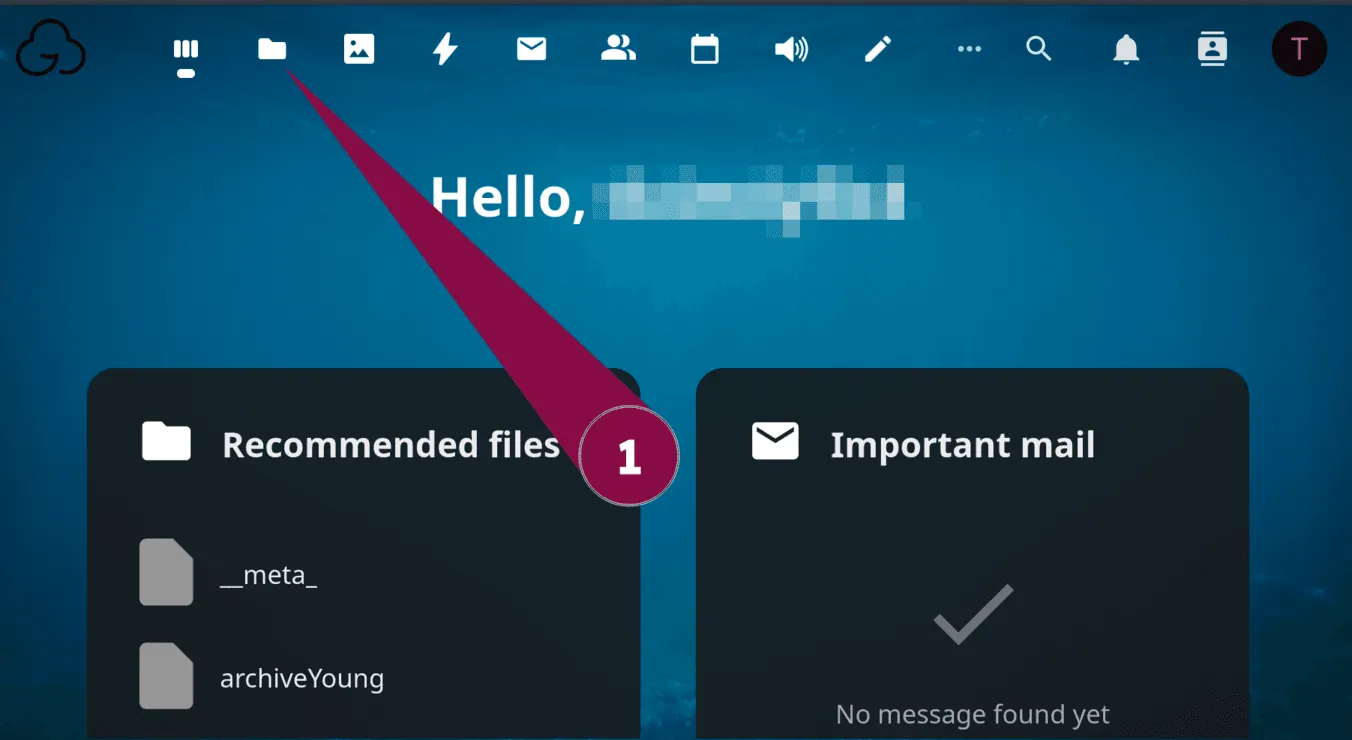
- Press the button on the bottom of the sidebar
Files settings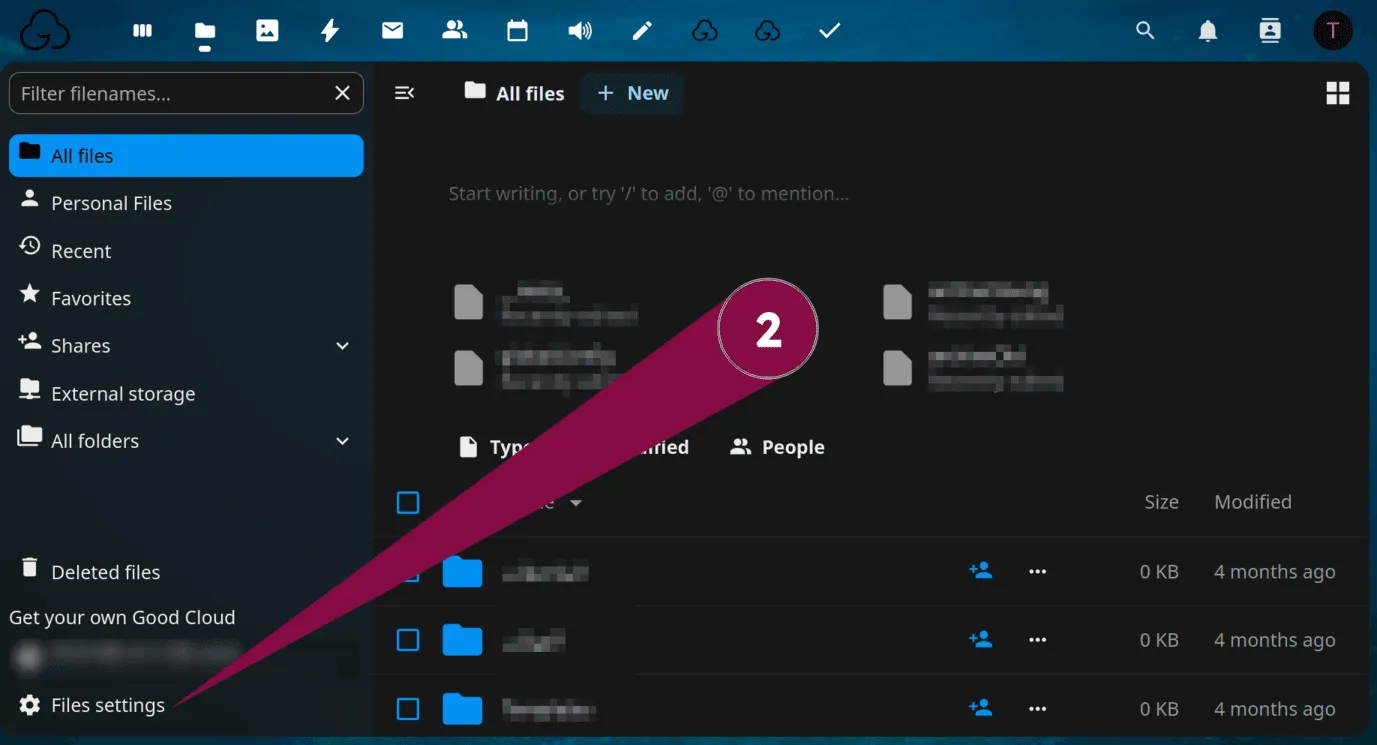
- Scroll down to the
WebDAVsection, then copy the full URL shown inside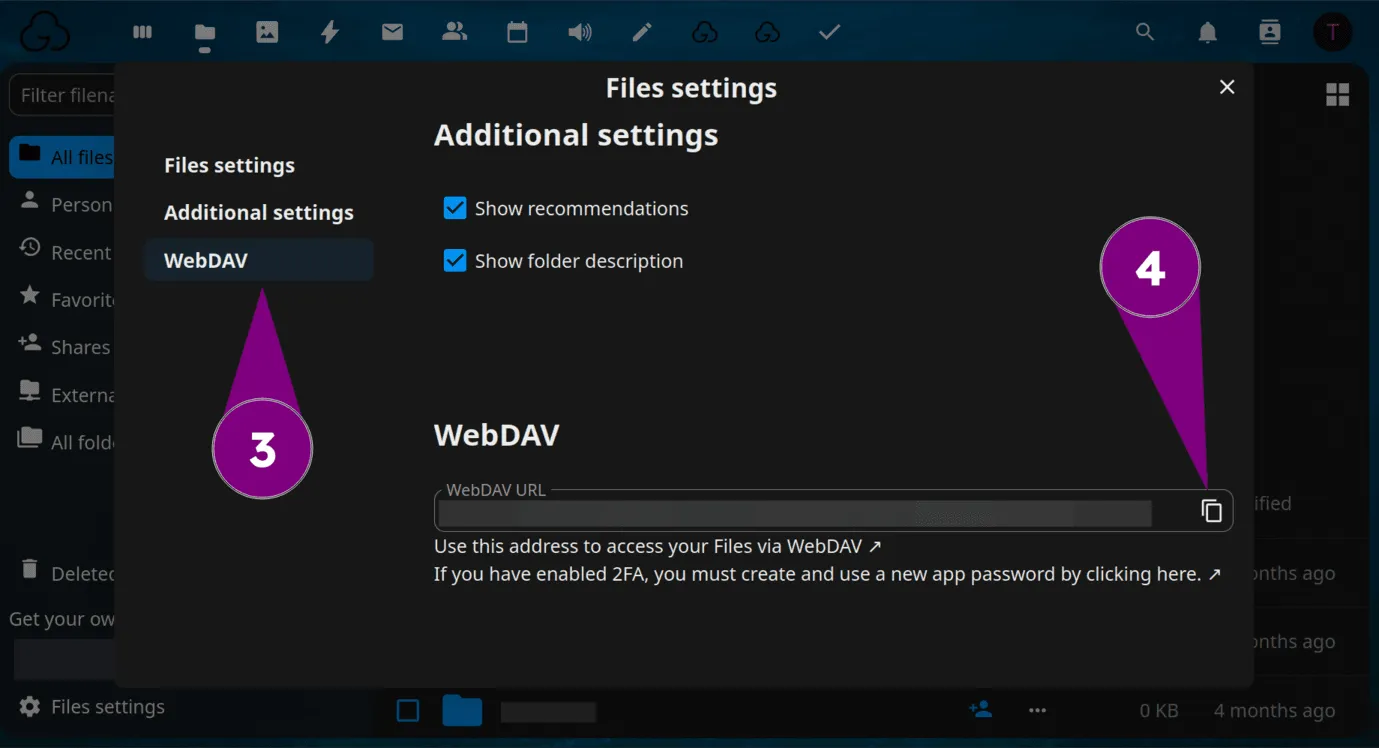
- Switch to Butterfly, and paste the URL in the URL input box in Butterfly
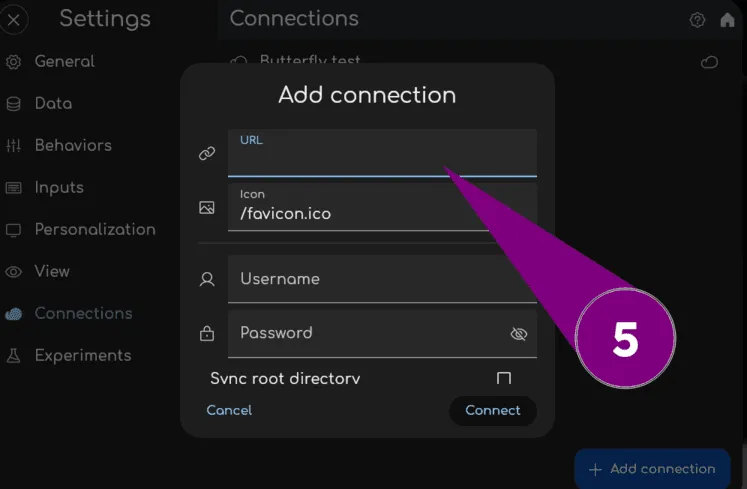
How to get the password and username
Sección titulada «How to get the password and username»- Go to your Nextcloud account info by pressing the profile picture on the corner
- Then, press
Settings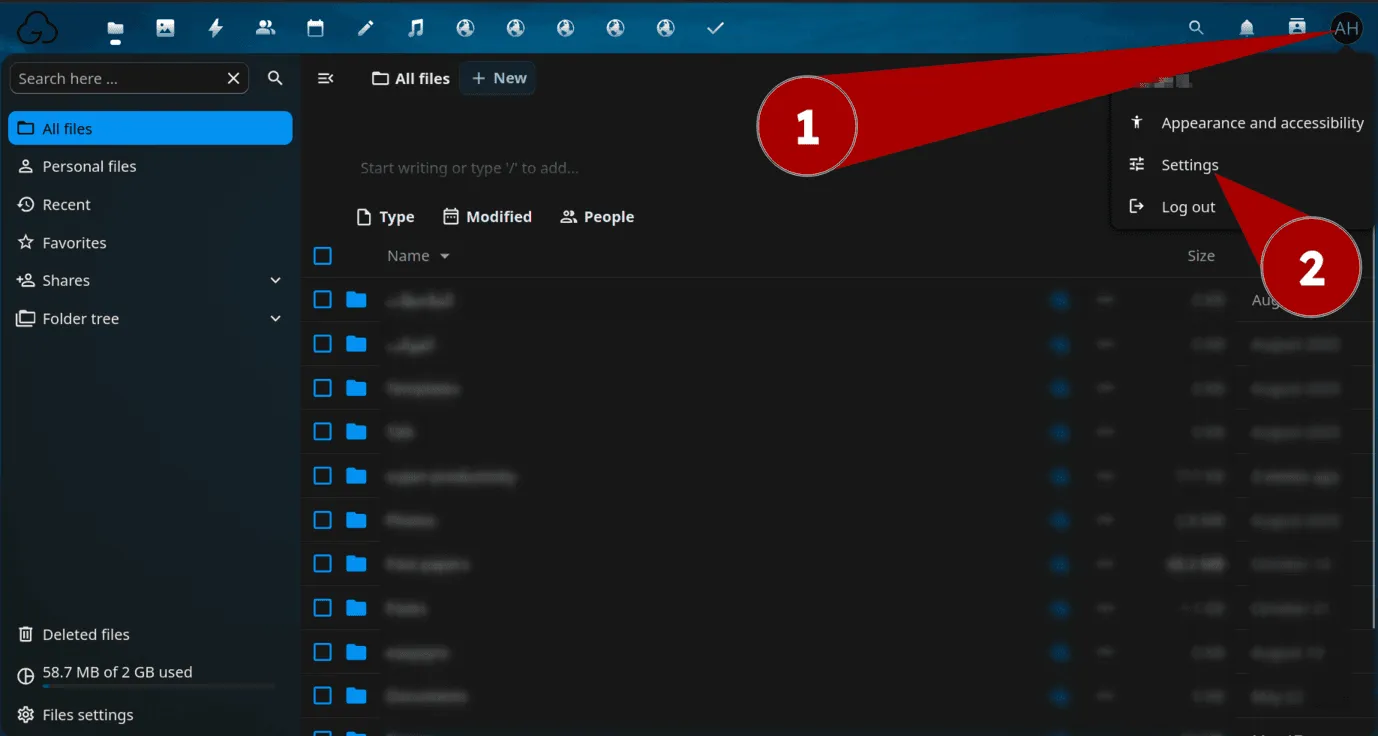
- In the Security tab, scroll down to
Devices & sessions - Enter any name for the app name input box
- “Butterfly Connection” is a good name to use, as it is identifiable and clear.
- Press the button called
Create new app password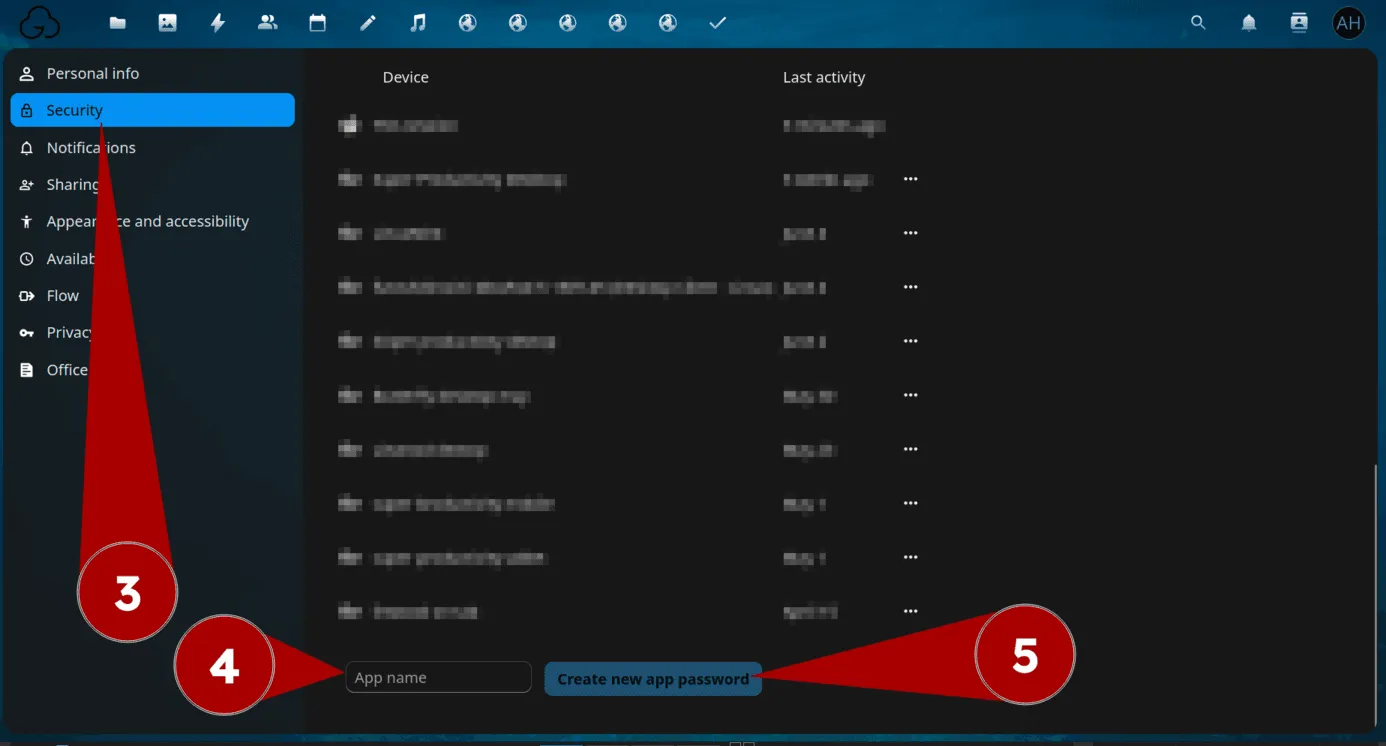
- After authenticating, copy the app password username shown on the page, and paste it in the username input box in Butterfly
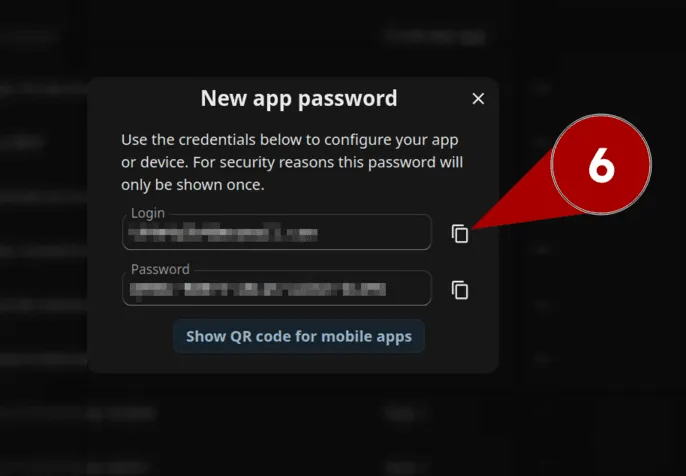
- Finally, copy the password and paste it in the password input box in Butterfly
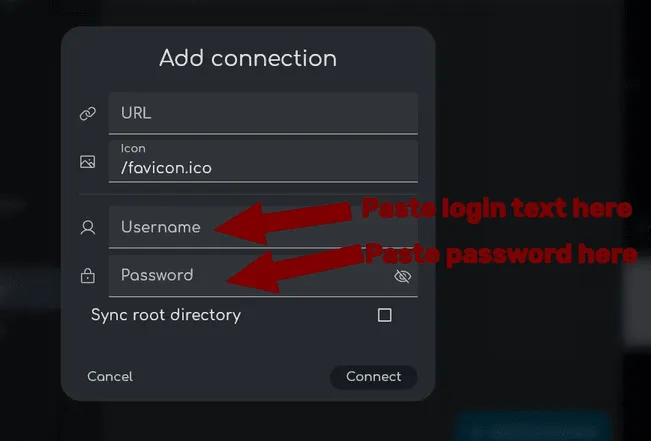
Finalizing the connection setup
Sección titulada «Finalizing the connection setup»After doing the above, press the Connect button.
If you have done everything correctly, there will be some new stuff down the popup.
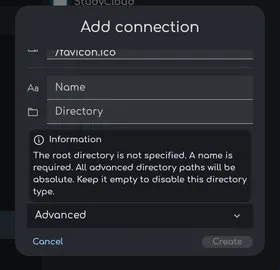
Type the name of this connection in the Name inputbox, you can name it anything.
Then, for the Directory inputbox, you need to type where should Butterfly store stuff inside this cloud storage.
For example:
if you type ButterflyDocs for Directory, Butterfly will store all your files inside the ButterflyDocs folder in your cloud storage.
Lastly, after typing the name of the folder you want Butterfly to store your notes in, press Create.
That’s it. Syncing to the cloud should work now. 🎉
Sincronización sin conexión
Sección titulada «Sincronización sin conexión»Esta función le permite editar sus archivos en servidores remotos mientras esté fuera de línea.
Abre el menú emergente en un archivo o carpeta y haz clic en Sync. Esto descargará el archivo o carpeta y lo guardará localmente. Para sincronizar todo el directorio raíz, haga clic en la marca de verificación en el diálogo de crear o haga clic en el control remoto en la configuración y haga clic en la marca de verificación en la sección de administración.
Hay algunas limitaciones:
- No puede eliminar un archivo o carpeta mientras esté desconectado.
- No puede añadir, editar o eliminar plantillas mientras esté desconectado.
Otros métodos de almacenamiento
Sección titulada «Otros métodos de almacenamiento»Si estás en un dispositivo nativo, también puedes sincronizar el directorio de aplicaciones con tu plataforma favorita. Google Drive has an official app on Windows and there are unofficial ones on the Play Store. On Linux you can also use the native remote storage system and change your data directory to this or add a new external storage if you click on the add connection button.
Supported file types
Sección titulada «Supported file types»Butterfly supports importing SVG, Butterfly Note (.bfly), Butterfly Raw Note (.tbfly).
For the steps to bring files into a document or create output files, see Importing and Exporting.
Butterfly Note (.bfly)
Sección titulada «Butterfly Note (.bfly)»This file type is the recommended format for saving notes.
It is a zip archive containing the information (mostly in JSON files) about the note. These included JSON files aren’t optimized to be readable by a human in its raw form.
Butterfly Raw Note (.tbfly)
Sección titulada «Butterfly Raw Note (.tbfly)»This file is recommended for use with version control software like git.
This file is not a zip archive; instead it is a JSON file. It contains all the information about the note in a single JSON file that is optimized for being readable and nicely formatted. It is slower to load than the normal Butterfly Note.
This file type doesn’t save information about the note! When this file is imported into Butterfly, it is treated as a single image.
Use this ONLY when the note shouldn’t be modified by Butterfly.